
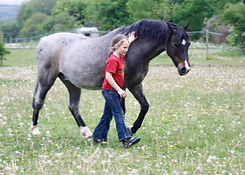


Equine Interaction
Equine interaction is a core offering at Heart to Hand, centred around facilitating safe, meaningful opportunities for people to engage with our equines. The environment is carefully managed and the focus is on communication, trust, and connection. This approach benefits both humans and horses, prioritising safety, mutual respect and authentic engagement.
Why Equine Interaction?
Equine interaction is not primarily about training or riding horses although these activities may be included; the focus is on relationship, reflection, and growth. Horses invite us to be present, to listen, and to connect in ways that enrich everyday life. The benefits are profound and enduring.
Physical, Physiological & Neurological Benefits
Interacting with horses supports the body in powerful ways. Their movement, warmth, and presence improve balance, coordination, strength, and overall body awareness. Being with horses also influences our physiology: oxytocin rises, cortisol lowers, and the nervous system settles into a calmer, more regulated state. Their scent, breath, and rhythmic movement soothe the senses and help us feel grounded and present.
Psychological Growth & Personal Development
Horses mirror our emotional state with honesty and clarity, helping us recognise and regulate our feelings. They invite patience, presence, and mindfulness, drawing us into the moment. Learning horsemanship builds mastery, confidence, and resilience, while offering endless opportunities to learn from mistakes without judgment. Horses also strengthen leadership qualities such as clarity, calm authority, and healthy boundaries. Their playful, curious nature encourages creativity and fresh perspectives.
Mental & Emotional Well‑Being
Time with horses reduces stress, anxiety, and emotional overwhelm. Their calm presence supports emotional stability, increases self-esteem, and creates space for inner peace and reflection. Horses offer a safe, non-verbal connection that can help repair trust and support healing from relational wounds. Their rhythmic movement and gentle breathing naturally lower heart rate and promote deep relaxation.
Social & Relational Benefits
Horses offer non‑judgmental companionship and a sense of belonging. Building trust with a horse teaches mutual respect, patience, and consistency—skills that naturally strengthen human relationships too. Because horses communicate primarily through body language, they heighten our awareness of non-verbal cues and improve communication across all areas of life. Caring for horses also nurtures empathy, responsibility, and attunement.
Spiritual, Symbolic & Existential Benefits
Horses reconnect us with nature and evoke a sense of awe, humility, and gratitude. Horses help us become more grounded in our bodies, more aware of our emotions, more connected to others, and more attuned to the world around us. They invite us into a relationship that is healing, honest, and deeply human. Their beauty, power, and grace resonate with deep archetypes of freedom and strength. For many, horses offer a spiritual dimension—inviting reflection, stillness, and inner peace. Their presence can also support life transitions, grief work, and personal rites of passage. In many religions, horses appear as symbols of God’s creation, heavenly presence, and divine strength. In the Bible the Book of Revelation describes the glorified, resurrected Jesus Christ riding a majestic white horse.
Equine Interaction Sessions
A Different Kind of Teacher
Horses offer honest, non-judgemental companionship, enabling us to see ourselves more clearly, but without the self-condemnation, blame and shame that is so common in human relationships. Horses communicate constantly through body signals, movement, and behaviour. When we learn to observe and respond appropriately to these signals, the horse has no need to speak louder. By slowing down and paying close attention to subtle communications such as ear flicks, facial expressions, weight shifts, and breathing , we can learn to interpret and use the soft cues that matter most to horses. Sharing space with horses gives us a great opportunity to increase self-awareness and thoughtful, mindful action. Feedback within the relationship becomes a mirror, offering an amazing opportunity to reflect on our own behaviours and responses, and make necessary adjustments.
Building a Foundation of Trust
The cornerstone of our equine interaction sessions is a safe and supportive learning environment, designed to nurture positive experiences for people and horses alike. Equine interaction is a conversation without words. Horses share their thoughts through subtle gestures, and when you respond softly, something magical happens: trust grows. The horse relaxes, you feel more grounded, and suddenly you’re not just two beings standing together - you’re partners in a shared story. This encapsulates the essence of Equine Interaction at Heart to Hand: slowing down, listening, and allowing connection to guide the experience. Such interactions provide significant benefits, including reduced stress, increased confidence, improved communication, and a deep sense of trust and connection.
Putting the Relationship First
Picture yourself stepping into a tranquil space. A horse notices your arrival, lifting its head and flicking its ears with curiosity. You pause, noticing the way it shifts its weight, the softness in its eyes. You take a deep breath, and consciously relax. Here, the goal is not to command but to listen, creating a silent conversation through gestures and presence. In that moment, you become partners in a quiet, mutual conversation. Each interaction is a chance to learn, to reflect, and to connect more deeply — not just with the horse, but with yourself. It’s less about “doing” and more about being together, discovering a rhythm that feels natural and alive. Equine Interaction is not about taking charge or being in control although it certainly includes leadership and giving and asking for respect. And while there are definitely things to do together, connection comes first. The emphasis is on relationship rather than control, nurturing a mutually respectful connection in which both parties have a voice. In this context each interaction strengthens the bond between horse and human, laying the groundwork for lifelong learning and partnership. When a horse and a human are in harmony, anything becomes possible. Rather surprisingly, horses do seem to enjoy doing things with people, and when the relationship is right, you can teach them just about anything.
The Human-Equine Connection
The connection between humans and horses is deeply rooted in history. For millennia, horses have been indispensable partners in transportation, agriculture, warfare, and companionship. This shared history has forged a profound bond that transcends mere utility. The deep connection to horses arises from a complex interplay of biological, psychological, and historical factors, offering emotional and spiritual resonance for many. The bond is rooted in millennia of shared history, where horses served as partners in survival, symbols of status, and companions. The horse-human partnership is characterised by mutual trust, respect, and affection. It is a deep relationship that extends beyond utility to become a source of personal growth and joy.
An Example of a Session
Arrival As you walk through the gate the horses notice you. One lifts its head, ears flicking toward you, curious but unhurried. Already, you sense this isn’t about rushing or “doing” — it’s about being. First Connection You pause, breathe, and let yourself settle. The horse notices. It shifts its weight, takes a step closer, then waits. This is the beginning of the conversation — no words, just presence. You realise the horse is watching you as much as you’re watching it. Listening As time passes, you begin to notice subtle cues—the flick of an ear, the swish of a tail, the horse’s gentle exhale. Each signal is a message. You lean in, not with your body, but with your attention. The horse softens, and you feel a quiet trust building. Interaction Guided prompts help you explore simple ways of responding — moving when the horse moves, pausing when it pauses. It feels like a dance, slow and subtle. The horse begins to mirror you, and you mirror the horse. Connection deepens, and suddenly you’re not just standing together — you’re in sync. Reflection Afterward, you step back and notice how you feel. Calmer. More grounded. More aware of yourself and the space around you. The horse has given you something intangible but real — a sense of trust, confidence, and presence that lingers long after you leave the field. That’s the rhythm of equine interaction at Heart to Hand: a journey of listening, responding, and discovering connection that grows with every step.
After the Session - Reflection & Feedback
You may be given some questions to consider for personal reflection and evaluation. It is your choice whether or not to answer them, or whether to share your reflections with us, but we do encourage participation for your own benefit. We are always grateful for comments and feedback. Constructive criticism informs our practise and allows us to make corrections. Encouragement is always appreciated, as are reviews for the website.

I just wanted to thank you for a most wonderful weekend of learning and for your hospitality, generosity and kindness during the course. You, your horses and those around you, create such an amazing, peaceful energy that we were all lucky enough to enjoy a little slice of, so thank you.
~ Rosie Lewin